On 16 July 2026, Moonshot AI announced Kimi K3. Moonshot crossed the three-trillion-class threshold while adding native vision and releasing the complete checkpoint eleven days after product launch.
This release brief was checked against first-party material on 10 August 2026. The date above is the public announcement date, not the date a repository was created or a third-party provider added the model. Where access or weights arrived later, that distinction is recorded below.
Release record
| Field | Verified detail |
|---|---|
| Announcement | 16 July 2026 |
| Availability or weight release | API and products on 16 July; full model weights on 27 July 2026 |
| Release type | frontier open-weight native multimodal agent model |
| Access | full weights under the custom Kimi K3 licence plus Kimi products and API |
| Architecture | a 2.8T-parameter MoE using Kimi Delta Attention, Attention Residuals and 16 of 896 experts per token |
| Maximum stated context | one million tokens |
What changed
Kimi K3 is one of the window’s defining open releases. Its scale is not merely a headline: Kimi Delta Attention, Attention Residuals and extreme expert sparsity are intended to make a 2.8T model usable for long coding, search and knowledge-work trajectories. The launch also separates availability dates correctly—users could access K3 on 16 July, while full weights arrived on 27 July under a custom licence rather than MIT.
The practical comparison is therefore not simply whether Kimi K3 has the largest headline score. Teams need to ask whether its architecture, access terms, latency, tool behaviour and evaluation setup match the workload they actually intend to run. A model can lead one harness while losing on cost, refusal behaviour, multilingual quality or repeatability in another.
Benchmarks worth retaining
| Evaluation | Reported result | How to read it |
|---|---|---|
| Terminal-Bench 2.1 | 88.3 | Kimi Code harness at max effort |
| DeepSWE | 67.5 in Kimi’s table; 67.3 on mini-SWE-agent | Harness-specific values retained separately |
| BrowseComp | 91.2; 90.4 with full 1M context and no management | Two disclosed context strategies |
These are release-time results, not independently reproduced guarantees. Kimi reports max-effort results and uses different preferred harnesses across vendors; full-context BrowseComp without compaction is a separate 90.4 result from the main 91.2 table entry. Scores should remain attached to the disclosed effort setting, agent harness, tool access, timeout, context-management policy and judge model. Moving a number into a procurement sheet without those conditions creates false comparability.
Architecture and access
Kimi K3 is described as a 2.8T-parameter MoE using Kimi Delta Attention, Attention Residuals and 16 of 896 experts per token with one million tokens of stated context. Its access position at verification time is full weights under the custom Kimi K3 licence plus Kimi products and API. That wording matters: open weights, source-available weights, an API, a product preview and a research demonstration give adopters very different rights and different levels of reproducibility.
Before deployment, record the exact model identifier or checkpoint, inference stack, quantisation, reasoning setting, region, price schedule and supplier terms. If the release uses a custom licence, read the licence itself rather than relying on the word “open” in launch copy. If it is API-only, preserve the dated documentation and change-notice route because the served snapshot can change without a downloadable artefact.
What an evaluation should test next
For Kimi K3, a credible internal gate should include:
- a frozen set of representative tasks with pass, fail and abstain criteria;
- a matched baseline using the same tools, timeout, prompt budget and reviewer rubric;
- repeated runs to expose variance rather than reporting a single best attempt;
- latency, token use and total task cost alongside task success;
- adversarial, multilingual and long-context cases relevant to the real deployment; and
- rollback evidence showing the previous model can be restored safely.
The wider model change-control guide explains how to keep model, prompt, tool and corpus changes reconstructable. The AI dependency inventory guide covers the release and supplier records needed after deployment.
AIEngine verdict
Kimi K3 is a mandatory benchmark for any serious open-frontier evaluation. Its custom licence, enormous storage footprint and serving complexity must be assessed alongside its strong agent results.
This is a launch assessment, not a certification. Benchmark leadership is useful evidence of where to test; it is not authorization to place the model in a high-impact workflow without domain evaluation, security review and an accountable owner.
Primary sources
Image provenance
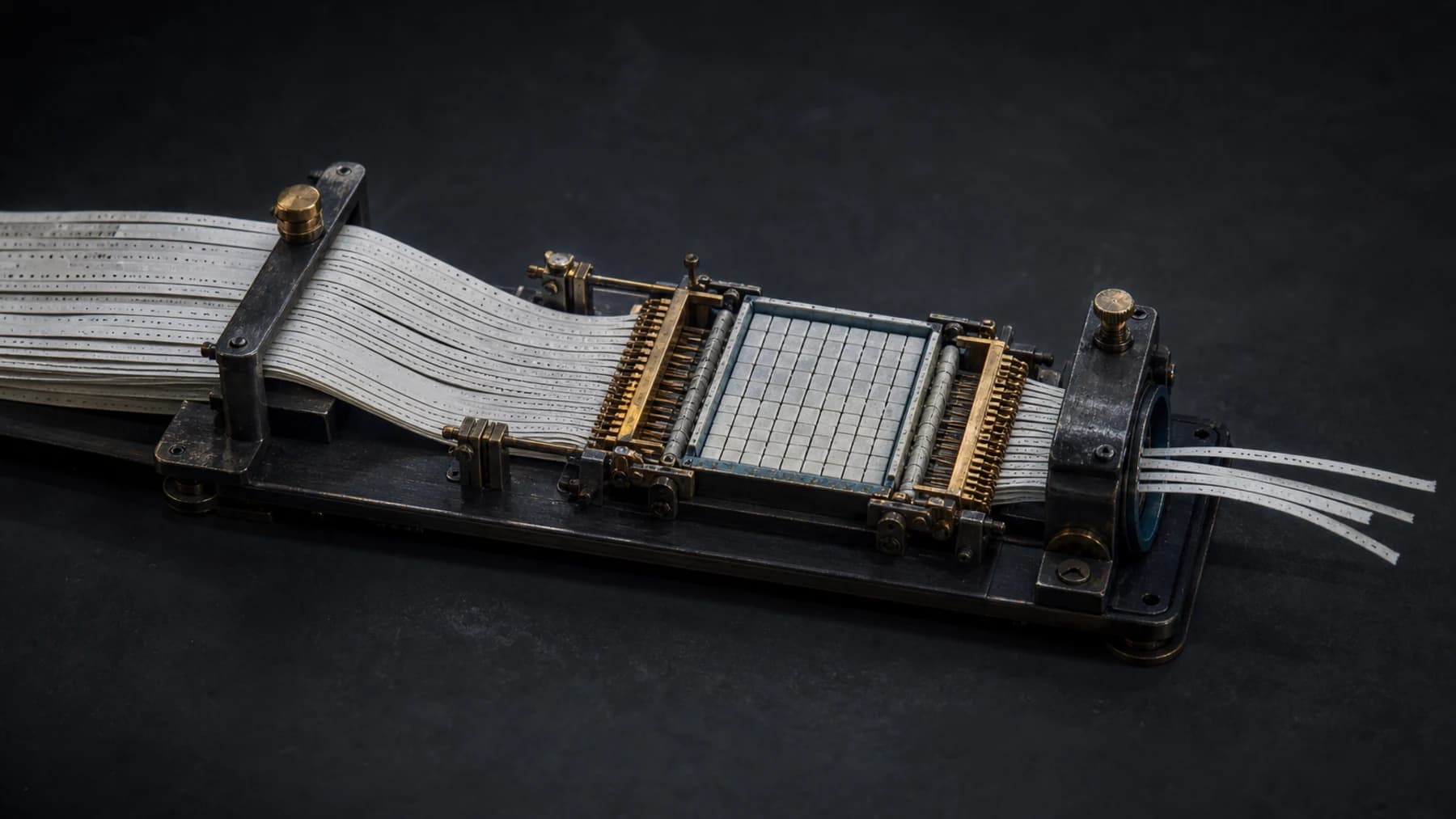
Hero image: Moonshot AI official Kimi K3 hero artwork. The locally served WebP is a crop of the first-party release or model-card asset recorded in the repository provenance manifest.